If Bitcoin Miners Abandon Mining for AI, What Happens to Bitcoin?
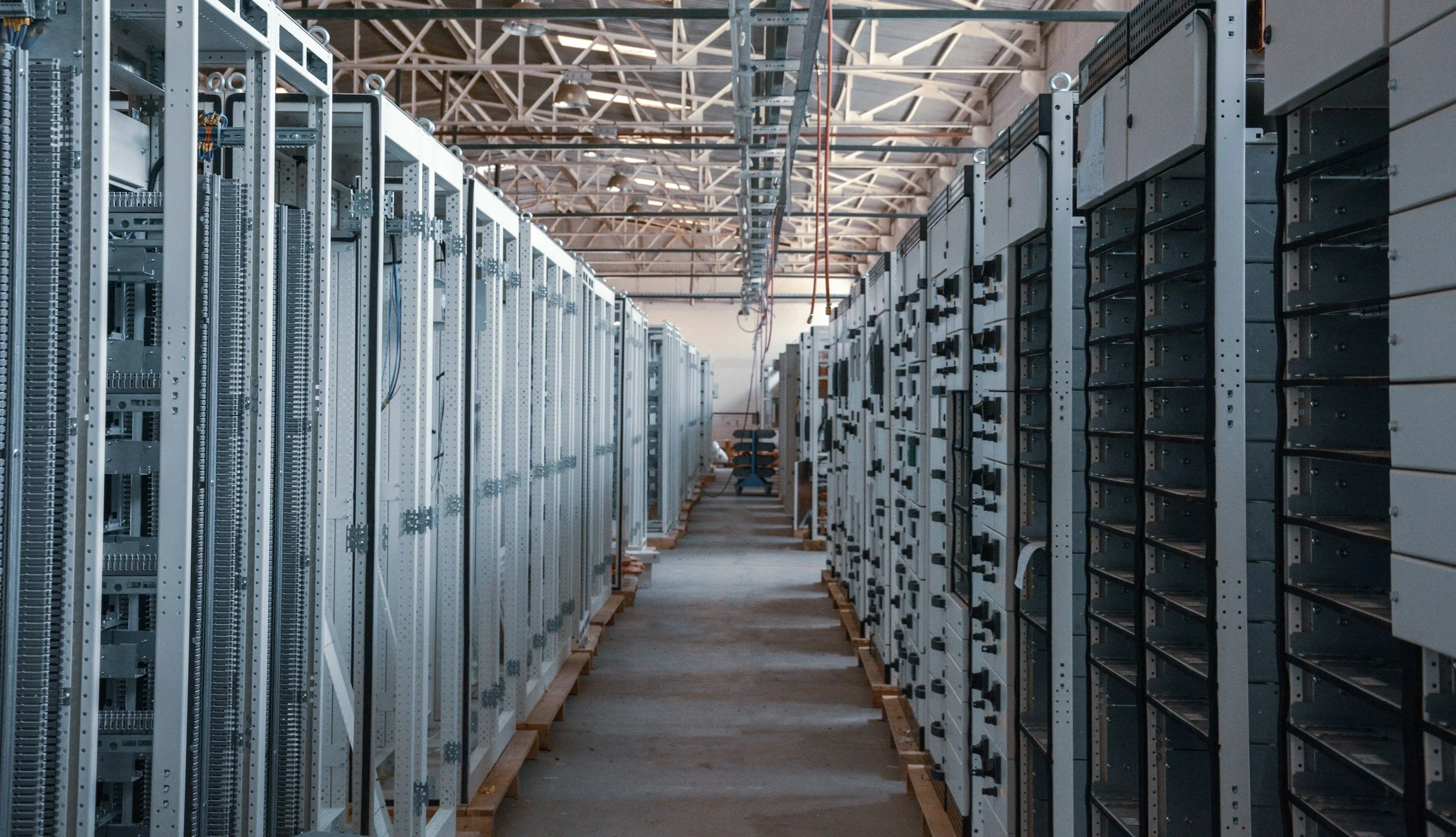
Core Scientific’s latest agreement with AMD is another sign that publicly listed Bitcoin miners increasingly see themselves not as cryptocurrency companies, but as owners of scarce power and data-centre infrastructure.
Under the 15-year agreements, Core Scientific will provide AMD with approximately 530 megawatts of capacity across five sites, representing more than $14 billion in potential contracted revenue. The partnership could eventually expand to 2.5 gigawatts. AMD executive Mathew Hein said Core Scientific’s facilities would “expand access to the infrastructure our customers need” to deploy AI systems at scale.
Core Scientific is not alone.
IREN is decommissioning Bitcoin-mining machines and installing GPUs in their place. TeraWulf has formally made high-performance-computing hosting its primary business and says it no longer intends to allocate growth capital to Bitcoin mining. Cipher has signed a ten-year AI-hosting agreement with Fluidstack worth approximately $3 billion. MARA, meanwhile, is pursuing campuses capable of switching between Bitcoin mining and AI workloads depending on which produces the better return.
This raises an important question: what happens if a significant portion of the Bitcoin-mining industry decides that selling computing infrastructure to AI companies is more profitable than mining Bitcoin?
The answer is not that Bitcoin suddenly stops functioning. Bitcoin was designed to adjust to changes in miner participation. But a mass migration toward AI would change mining profitability, network security, industry concentration and the investment case for publicly traded mining companies.
Why miners are choosing AI
The most valuable asset owned by many miners is no longer their fleet of mining machines. It is their access to electricity.
Large-scale AI development requires enormous quantities of power, land, grid connections, cooling systems and fibre connectivity. Securing those resources can take years. Bitcoin miners already control many sites where hundreds of megawatts have been approved, connected or developed.
As MARA chief executive Fred Thiel put it, “Power is the scarce input in AI.”
Bitcoin mining is also an unusually volatile business. A miner’s revenue depends on Bitcoin’s price, network difficulty, transaction fees and the block subsidy. Its expenses are dominated by electricity, equipment and financing. Hashprice—the expected daily revenue generated by a unit of mining power—can fall quickly even when a miner’s operating costs remain unchanged.
AI hosting offers a different proposition. Instead of receiving an unpredictable amount of Bitcoin, an infrastructure operator may receive contracted payments under ten- or 15-year agreements.
Cipher’s Fluidstack contract, for example, covers 168 megawatts and approximately $3 billion of revenue over its initial ten-year term. Google is backstopping $1.4 billion of Fluidstack’s obligations, helping Cipher finance the construction.
That type of revenue visibility is attractive to lenders and shareholders. But it does not mean the money is guaranteed or immediately available. Facilities still have to be financed, built, energised and delivered on time.
First, Bitcoin’s hashrate would fall
Bitcoin’s hashrate measures the total computational power being used to search for new blocks. Generally, a higher hashrate means more computing power would be required to attack or reorganise the blockchain.
If a substantial number of miners shut down their ASIC machines, Bitcoin’s total hashrate would decline.
The immediate effect would probably be slower blocks. Bitcoin’s mining difficulty does not adjust continuously; it retargets every 2,016 blocks. The protocol seeks to keep average block production close to one block every ten minutes.
Consider a simplified scenario in which 30% of the network’s hashrate disappears immediately. Until the next difficulty adjustment, the remaining 70% would still be attempting to solve blocks at the old difficulty.
Average block time could temporarily rise from ten minutes to roughly 14.3 minutes:
10 minutes ÷ 70% = 14.3 minutes
Transactions would still work, but confirmations would arrive more slowly. The 2,016-block difficulty period would also take longer than the normal two weeks to complete.
Then mining becomes easier for whoever remains
At the next adjustment, the protocol would reduce mining difficulty to account for the missing computational power.
Once that happens, average block times should move back toward ten minutes. The remaining miners would then control a larger share of the network’s total hashrate and would therefore have a greater probability of winning each block.
In the same simplified example, a miner that maintained its hashrate while 30% of its competitors exited would see its relative share of the network increase by approximately 43%, assuming no other miners entered:
1 ÷ 70% = 1.43
That does not necessarily mean its profit would rise by exactly 43%. Bitcoin’s price, transaction fees, electricity costs and pool fees could all change simultaneously. But measured in Bitcoin earned per unit of hashrate, the surviving miner’s economics would improve after difficulty adjusted.
This is why Bitcoin mining is self-correcting.
When mining becomes highly profitable, companies add machines and difficulty eventually rises. When mining becomes unprofitable, inefficient operators switch off, difficulty falls and the miners that remain receive a larger share of the available rewards.
AI can attract miners away, but it also makes Bitcoin mining more attractive for the miners that stay.
Bitcoin production would not permanently collapse
A miner exodus would not permanently reduce Bitcoin’s programmed supply simply because fewer miners were operating.
Issuance could temporarily slow before a difficulty adjustment because blocks would take longer to find. Once difficulty had fallen, block production would move back towards the ten-minute target. Bitcoin’s block subsidy and maximum supply would remain governed by the protocol rather than by the number of mining companies in business.
This means the idea that “miners moving to AI will make Bitcoin dramatically scarcer” is incomplete.
There could be a temporary reduction in issuance, but the lasting effect would primarily be a redistribution of mining rewards among the remaining operators—not a change to Bitcoin’s long-term supply schedule.
The greater concern is network security
Difficulty protects the timing of Bitcoin’s blocks. Hashrate contributes to the economic cost of attacking the network.
If global hashrate fell materially, the absolute amount of computing power required to compete with honest miners would also fall. Bitcoin would continue operating, but the cost of attempting a majority-hashrate attack would be lower than before.
The practical level of risk would depend on how much hashrate disappeared, where the remaining machines were located and who controlled them. Bitcoin’s proof-of-work system makes rewriting transactions progressively more difficult because an attacker must recreate the proof of work for the targeted block and subsequent blocks, then overtake the honest chain.
A moderate decline from an extremely high hashrate would not necessarily represent an immediate crisis. A prolonged collapse accompanied by increasing concentration, however, would deserve attention.
Investors should therefore watch not only total hashrate but also mining-pool concentration, geographic distribution and whether the remaining mining capacity is controlled by a small number of industrial operators.
The industry could become more concentrated
The miners most likely to leave are those with valuable sites but relatively expensive Bitcoin production.
A company might conclude that a grid-connected 300-megawatt campus is worth more as an AI facility than as a mining farm. Its ASICs could be sold, moved or written down, while the power infrastructure is rebuilt for GPUs.
This could leave Bitcoin mining increasingly dominated by specialists with exceptionally cheap electricity, highly efficient ASIC fleets or access to stranded energy that AI data centres cannot use.
AI facilities normally require stringent uptime, connectivity and cooling standards. Bitcoin mining is more flexible. Machines can be placed near remote power sources, curtailed during periods of grid stress and restarted when electricity becomes economical.
MARA’s proposed hybrid model illustrates this distinction. It plans to use Bitcoin mining as a flexible workload while developing higher-value computing capacity, rather than treating the two businesses as mutually exclusive.
Mining may therefore migrate away from premium data-centre locations and towards power sources unsuitable for conventional AI infrastructure.
ASIC machines cannot simply become AI computers
Investors should also understand that a mining facility cannot be converted by installing different software.
Bitcoin ASICs are purpose-built to perform SHA-256 hashing. They cannot be converted into GPUs capable of training or running modern AI models.
The operator must remove the ASICs and install entirely different servers. It may also need to rebuild cooling, networking, security systems and electrical distribution.
IREN’s transition shows how costly this can be. During its March 2026 quarter, revenue declined as the company decommissioned mining hardware before GPU capacity began generating revenue. It also recorded approximately $140.4 million in non-cash impairments, primarily connected with retiring mining equipment.
AI conversion can create a period in which mining revenue has disappeared but AI revenue has not yet arrived.
What Bitcoin investors should monitor
For investors holding Bitcoin itself, the most relevant indicators are:
Network hashrate and difficulty. Falling hashrate followed by falling difficulty would confirm that machines are leaving the network.
Hashprice. This shows the expected revenue generated by a unit of mining power. Rising hashprice after a difficulty reduction would indicate improving conditions for surviving miners.
Block times and transaction fees. A sudden hashrate decline could produce slower confirmations until the next retarget. Users might also pay higher fees when demand for limited block space increases.
Mining concentration. A smaller but geographically and institutionally diverse mining network could remain resilient. A smaller network controlled by a few pools or operators would be more concerning.
Miner selling. Companies funding AI construction may sell Bitcoin held on their balance sheets. That could create market supply even as they reduce future mining activity.
The transition does not create a direct mechanical reason for Bitcoin’s price to rise or fall. The price effect will depend on how investors interpret the trade-off between improved economics for remaining miners, lower aggregate security expenditure and possible Bitcoin sales by companies funding their AI expansion.
What mining-stock investors should monitor
The analysis is different for shareholders in companies such as Core Scientific, IREN, TeraWulf, Cipher, Hut 8 or MARA.
These shares should no longer automatically be treated as leveraged Bitcoin proxies. Investors increasingly own data-centre developers, power companies and infrastructure-financing vehicles whose remaining Bitcoin exposure varies considerably.
The most important questions are:
Is the AI agreement binding? A “development pipeline” or available power portfolio is not the same as a signed lease with a creditworthy tenant.
How much capital must be invested? Cipher estimates that its Fluidstack project will cost approximately $9 million to $11 million per megawatt of critical IT capacity. Large contracts can therefore require billions of dollars in construction spending before generating their advertised revenue.
Who provides the financing? Debt, convertible notes, warrants and new shares can materially dilute existing investors. AMD is receiving warrants under its Core Scientific arrangement, while Google received potential equity exposure as part of Cipher’s financing structure.
When does billing begin? Contracted revenue spread over 15 years should not be confused with current revenue. Investors should track energisation dates, construction milestones and the number of megawatts actually being billed.
Who bears the construction risk? TeraWulf warns that delays or cost overruns could allow customers to terminate agreements, seek penalties or require the company to find another tenant.
How concentrated is the customer base? A multibillion-dollar contract can reduce revenue volatility while simultaneously making the company highly dependent on one AI-cloud provider or technology company.
What is being sacrificed? Investors should examine how much Bitcoin production, treasury exposure and mining upside are being surrendered to obtain more predictable AI revenue.
Bitcoin mining will not disappear—it will find a new price
The migration from Bitcoin mining to AI is best understood as competition for electricity.
AI companies are offering long-term contracts for premium, grid-connected power. Rational miners will redirect suitable sites when the expected return exceeds the value of mining Bitcoin.
But every miner that leaves reduces competition for those that remain. Difficulty eventually adjusts downward, restoring profitability to lower-cost operators and attracting new hashrate if the opportunity becomes sufficiently compelling.
The likely result is not the end of Bitcoin mining. It is a smaller, more specialised and potentially more geographically dispersed mining industry—or, under a less favourable outcome, a smaller and more concentrated one.
For average investors, the central lesson is to separate three different assets that were once treated as nearly interchangeable:
Bitcoin is a monetary asset. Bitcoin mining is a competitive commodity business. AI infrastructure is a long-duration construction and leasing business.
A company moving from the second category into the third may become more predictable, but it also assumes new risks involving financing, construction, customers, cooling technology and hardware obsolescence.
The AI pivot may produce stronger businesses. It may also reveal that some “Bitcoin miners” were valuable mainly because they controlled scarce electricity.
In the next stage of the industry, the most important metric may no longer be how much Bitcoin a company can mine. It may be how much revenue it can generate from every megawatt it controls.