The Real Reason Bitcoin Fell 6% Overnight: Japan Just Triggered a Global Margin Call
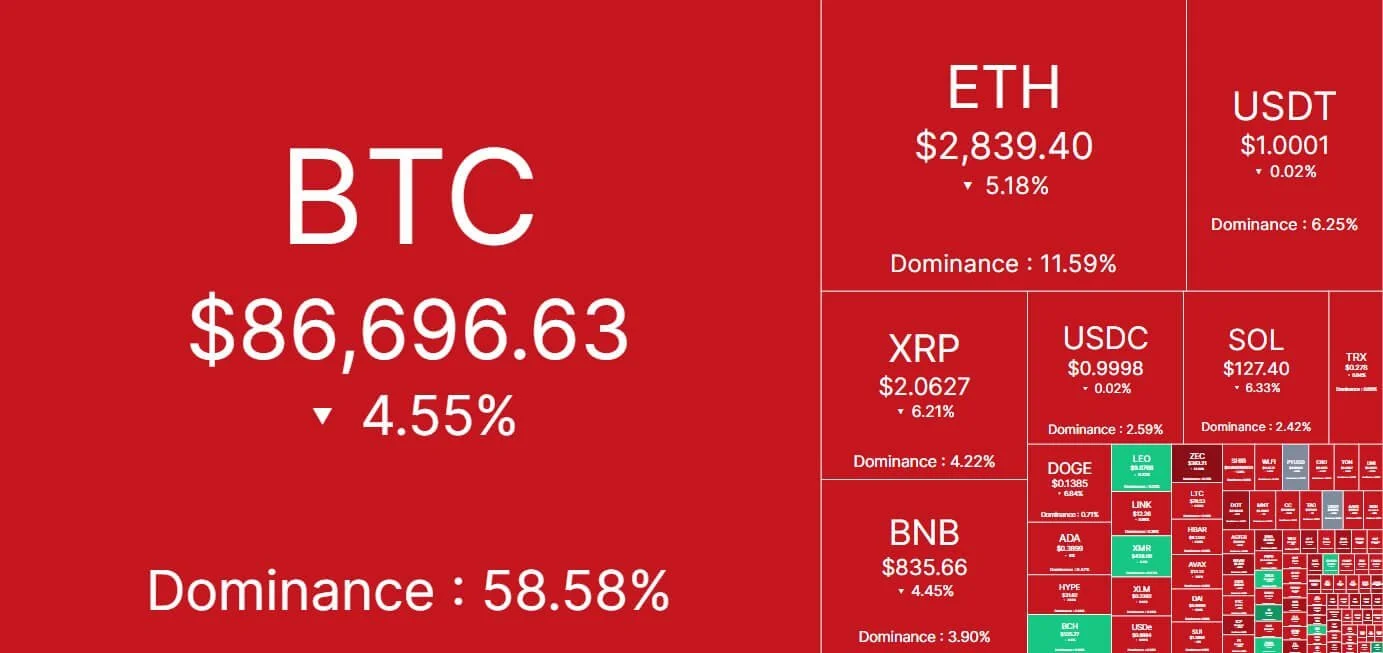
Bitcoin fell more than 6% this week as Japan’s 10-year government bond (JGB) yield surged to 1.879%, its highest level since June 2008. What looked like a simple crypto pullback was actually the result of a seismic macro shift: markets are pricing in the first meaningful Bank of Japan (BOJ) rate hike in decades at the December 18–19 policy meeting.
This spike in yields has triggered the partial unwinding of the yen carry trade, a global leverage engine worth trillions. As the yen strengthens and funding costs rise, leveraged positions, from tech stocks to Bitcoin, are being forced to unwind. Over $600 million in BTC liquidations occurred in hours, echoing last month’s historic $19 billion crypto wipeout.
But some of the most sophisticated market participants see opportunity. Whales accumulated more than 375,000 BTC during the downturn, while miner selling has dropped nearly 85%. The market now sits on a knife edge, waiting for BOJ guidance.
Why Japanese Government Bonds Matter: The Heart of Global Liquidity
To understand why Bitcoin reacted so violently, you need to understand the role Japan’s bond market plays in the global financial system.
For thirty years, Japan maintained:
near-zero or negative interest rates
yield curve control, suppressing long-term yields
a chronically weak yen
This created the perfect environment for the yen carry trade, one of the most profitable and widely used arbitrage trades in modern history.
What is the Yen Carry Trade?
Investors borrow in Japan at extremely low interest rates (historically 0%–0.25%), convert the yen into other currencies, and invest in higher-yielding global assets.
This includes:
U.S. stocks
U.S. Treasuries
Emerging market bonds
Crypto assets
Corporate credit
Real estate
Conservative estimates put the carry trade at $3.4 trillion, while some analysts argue it is closer to $20 trillion when accounting for derivatives and shadow leverage.
Why Rising JGB Yields Break Everything
When Japanese yields rise:
The yen strengthens
Yen-denominated debts become more expensive
Leveraged strategies become unprofitable
Global investors rush to unwind positions
Forced selling cascades across markets
This isn’t a crypto problem.
It’s a global funding-mechanism problem.
Bitcoin is simply one of the most liquid assets to sell when margin calls hit.
The Impact on Crypto: Liquidations, ETF Outflows, and Correlations Rising
The data from Novemer and December tells a clear story of stress:
$19B in crypto positions were liquidated in 24 hours on Oct 10 — the largest one-day wipeout in digital asset history.
$3.45B exited Bitcoin ETFs in November, including $2.34B from BlackRock’s IBIT, its worst month since inception.
$646M in BTC leveraged positions were liquidated on December 1 before midday.
Bitcoin’s correlation to equity markets surged:
46% with Nasdaq
42% with S&P 500
Bitcoin is no longer behaving as an “uncorrelated hedge.”
It is trading as a high-beta expression of global liquidity conditions, especially U.S.–Japan rate differentials.
The Paradox: Smart Money Accumulated
Despite the carnage, two major datapoints point to confidence beneath the volatility:
1. Whales accumulated 375,000 BTC
Large wallets increased their holdings aggressively, indicating long-term conviction.
2. Miners drastically cut selling
Miner monthly supply dropped from 23,000 BTC → 3,672 BTC, the lowest since early 2021.
This suggests structural buyers absorbed the forced liquidations.
What Happens Next?
All Eyes on December 18–19 BOJ Meeting
The BOJ’s upcoming decision is now the single most important macro event for Bitcoin and global risk assets.
Scenario A: BOJ hikes rates and signals more tightening
Yen strengthens further
Carry trade unwind accelerates
Bitcoin retests $75,000
Equities and EM risk assets decline
Volatility spikes globally
Scenario B: BOJ pauses or reassures on accommodative policy
Yen weakens or stabilizes
Carry trade stabilizes
Bitcoin could short-squeeze back toward $95,000–$100,000
Risk assets recover
ETF inflows resume
Whales appear to be positioning for Scenario B.
The Big Picture: Beyond Crypto
This moment illustrates a broader truth financial markets have ignored for a decade:
Money has a cost. The carry trade’s free-money era is ending.
Rising Japanese yields are not just a local story. They ripple through:
global liquidity
leverage cycles
currency markets
equity valuations
crypto price dynamics
Bitcoin is no longer insulated from the global cost of capital. It is intimately tied to it.
Final Word: Bitcoin Didn’t Crash
This downturn was the mechanical unwinding of the largest arbitrage loop in financial history.
The real driver was Japanese Government Bonds, the quiet fulcrum of global leverage.
As the yield environment resets, investors should expect more volatility, more macro sensitivity, and more moments where crypto reacts directly to central bank decisions thousands of miles away.
The widowmaker came collecting. Markets must now decide who survives the reset.